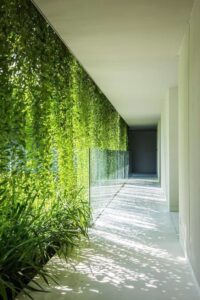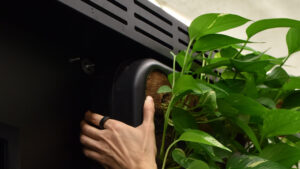
Once there was nature—meadows and untouched forests… now only concrete, asphalt, and smog. What initially emerged as a solution to exponential population growth has led to further challenges such as air pollution, rising temperatures, and biodiversity loss. Increasing the presence of greenery and trees in our cities and indoor spaces has therefore become essential for a greener future and, naturally, for improving our quality of life. Let’s talk about it!
Clean air and healthy cities
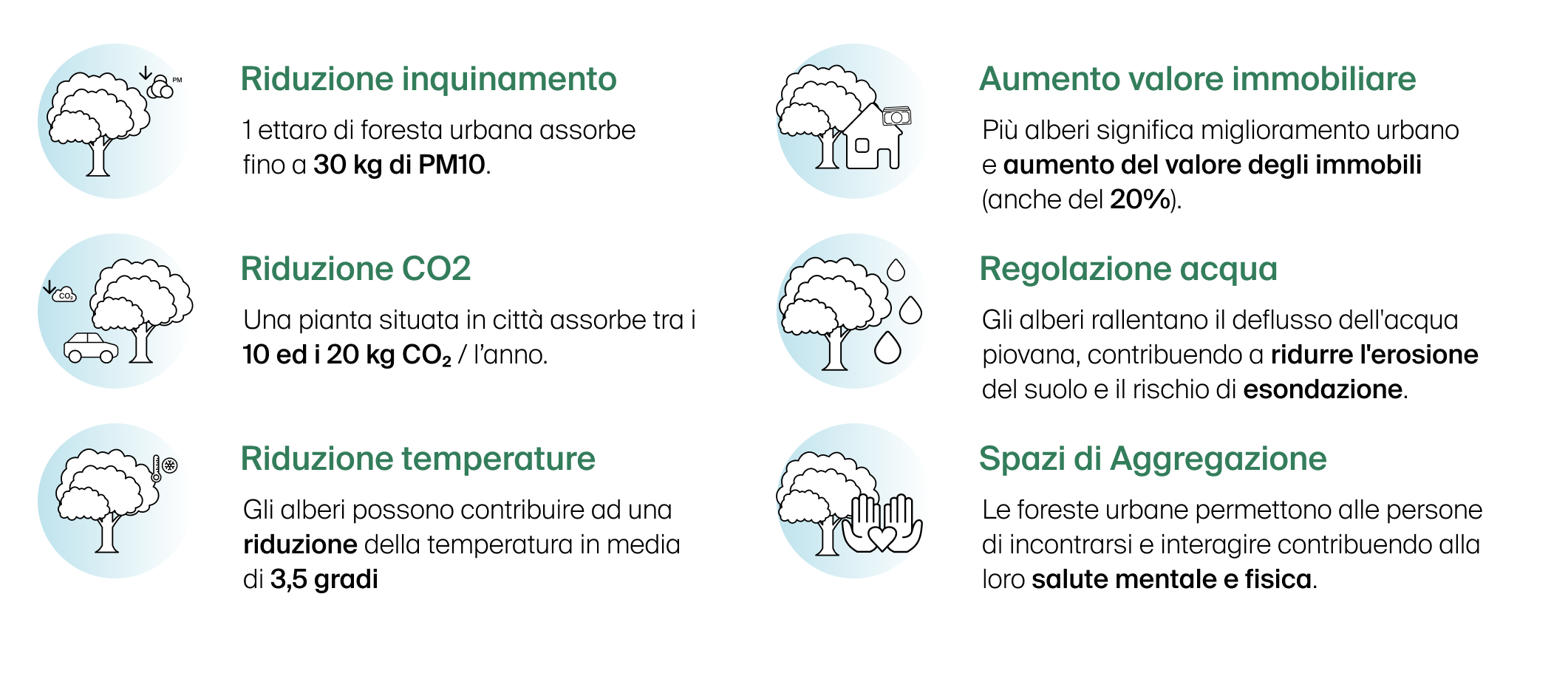
Trees in cities bring numerous benefits. They act as natural air filters, absorbing atmospheric pollutants such as nitrogen dioxide, ozone, and particulate matter (PM), helping to reduce smog levels and improve residents’ respiratory health. In addition, trees absorb carbon dioxide—one of the main greenhouse gases—thus contributing to climate change mitigation. They also significantly reduce the “urban heat island” effect. During summer days, asphalt surfaces and buildings can heat up considerably, increasing local temperatures. Trees provide shade and, through the process of evapotranspiration, cool the surrounding air, creating cooler and more pleasant microclimates. Finally, well-designed green spaces enhance urban aesthetics, increase property values, and create welcoming gathering places for the community.
Read also: