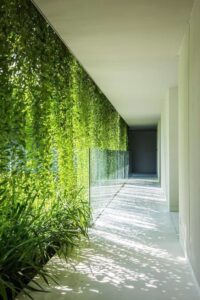
It is often said that spending time in nature is good for us. But how, exactly?
In recent years, an increasing number of studies have confirmed that contact with natural environments improves psychophysical well-being, cognitive performance, and even cardiovascular health. Green spaces have measurable and tangible effects on both our bodies and our minds.
Here’s what science says:
Increases calm and the perception of relaxation
Greenery is not just pleasant to look at. It stimulates areas of the brain associated with relaxation and reduces activity in the prefrontal cortex, as well as the production of cortisol, the stress hormone. Even a glance out the window can slow the heartbeat—and if that window opens onto a garden, even better.
According to researchers Rachel e Stephen Kaplan, there is a phenomenon known as soft fascination, which occurs when we are exposed to a natural environment that captures our attention in a gentle, non-intrusive way. Soft fascination does not require any active effort on our part; instead, it unfolds naturally and gradually, allowing us to remain focused without straining the brain.
Improves Reasoning
A study conducted by the University of Michigan found that participants performed better on memory tests after taking a walk in nature compared to those who had walked in an urban environment—by as much as 20%.
But that’s not all: in offices that include natural elements, performance can increase by up to 25% and productivity by up to 11%.
Improves Reasoning
Natural environments open the mind, fostering creative problem-solving and deeper introspection. It’s no coincidence that nature has always inspired human creativity. In general, the more immersive the natural setting, the stronger the creative boost.

Benefits both mental and physical health
Outdoor air—especially in green areas—is cleaner than indoor air, where concentrations of VOCs and other indoor pollutants can be up to ten times higher than outdoors.
Healthier breathing means fewer irritations, a lower risk of “sick building syndrome” symptoms, and even a reduced risk of respiratory diseases and cancers linked to chronic exposure to air pollutants.
Time spent in green spaces is associated with lower blood pressure and, overall, a healthier life. Living close to greenery is linked to a reduced risk of mortality and cardiovascular diseases ,as well as lower obesity rates and better respiratory function.
Today, nature is prescribable. “Nature prescriptions” —medical recommendations to spend time in natural environments—are now supported by the scientific community to promote cardiometabolic and mental well-being.
Brings peace to the senses and reduces feelings of overwhelm
The theory known as Attention Restoration suggests that nature frees the mind from the stress caused by the overwhelming amount of stimuli we are exposed to in modern life.
Nature brings harmony to our senses through its varied and balanced stimuli, in contrast to the chaotic stimuli of urban environments. Among the sensory benefits are reduced hyperactivity and impulsivity, with the greatest benefits observed in individuals affected by chronic urban stress, sensory hypersensitivity, and neurodivergent people.
Even a brief immersion in green environments is enough to reduce anxiety caused by overstimulation.
In short, nature truly has a positive impact on both physical and mental health. So why not start reconnecting with it?
If time or commitments keep you away from nature, you can always bring nature into the spaces where you spend 90% of your time—indoors. Aura Breathing Green Walls, for example, create green oases in homes and offices, improving air quality and allowing you to enjoy all the benefits of being close to plants.
Discover Aura breathing green walls

Sphera
The stand-alone breathing green wall, available in Sphera and Sphera+ versions. Its installation is easy and does not require any structural intervention.
Discover SpheraRead also: